
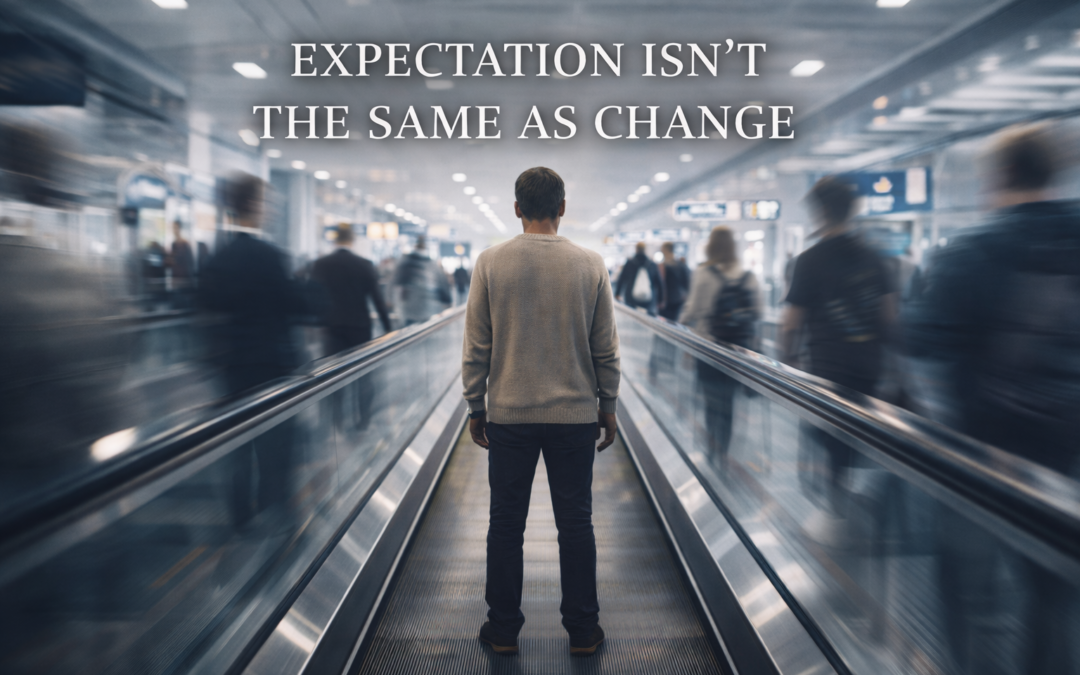
Expectation Isn’t the Same as Change
You can’t create new results from the same habits that created the old ones. You can feel hopeful and certain this chapter will be different – and still find that nothing really changes. Not because you’re failing, but because expectation alone doesn’t move a life. Life responds to how you show up on the inside. And that internal operating system is what most people never slow down long enough to truly examine.
Pattern
I hear it all the time: “I know things are about to change.” The intention is real, but underneath there’s hesitation. Their words are cautious. They brace for disappointment before anything has gone wrong. They want more money, but make every decision with tension. They want confidence, but rehearse every conversation. They want calm, but stay quietly on alert. Nothing dramatic. Nothing “wrong.” Just a gap between what they expect and how they actually live while they wait.
Reality
This isn’t about willpower or “believing harder.” It’s about familiarity and safety. Your system is wired to choose what’s known, even when it no longer serves you, because predictable feels safer than new. So if you expect change without changing how you relate to uncertainty, effort, or risk, your system quietly resists – just enough to keep your behaviour familiar. Insight stays in your head. Your default way of being runs the show. And behaviour always wins.
Engagement
Most people believe change happens when expectation becomes strong enough. It doesn’t. Expectation says, “This will happen.” Embodiment says, “This is who I am now.” You don’t act differently because you believe more. You act differently when a new way of being becomes normal – when your system no longer feels the need to protect you from the unknown. Change doesn’t arrive. It stabilises. And when it stabilises, results follow.
Recognise Your Default Response
This week, notice how you respond internally when something feels uncertain. Do you brace, rush, justify, or withdraw? Don’t fix it yet. Awareness is the first interruption.
Stop Waiting to Feel Ready
Notice where you delay action until confidence arrives. That delay is the old pattern protecting familiarity. Practise acting from steadiness, not certainty.
Practise Safety in Small Moments
Embodiment is trained quietly. Speak one truth without cushioning it. Take one action without rehearsing it. Let your system experience safety after movement, not before.
Consequences
friend, if this doesn’t shift, here’s what happens. You keep setting intentions, but trust yourself less each time they don’t land. You keep learning, yet feel a widening gap between insight and lived experience. Over time, progress feels heavy. Forced. Conditional. That’s not a motivation problem. It’s the default operating system you’re living from.
Self-Recognition
- Where am I expecting change without embodying it?
- What identity posture am I unconsciously protecting?
- What would today look like if certainty led my choices?
- Where could I relax and still move forward?
Conclusion
Nothing about you needs fixing. And change doesn’t require pressure or force. But it does require honesty. Honesty about the default way you’re still living from while hoping for different outcomes. When that internal position shifts, behaviour follows. When behaviour follows, evidence accumulates. You don’t need to expect harder. You need to live differently.
A Simple Way to Say Thank You
Because Meaningful Work Deserves a Moment of Gratitude
The work we do together here often reaches into very real moments of life – personal, professional and sometimes deeply human. Through these mindset memos, quiet breakthroughs, calibration calls, community coaching, and one-to-one or corporate work, clients often ask me how they can say thank you for the support and perspective they receive.
If something here has helped you feel clearer, steadier or more confident in your next step, the simplest way to show your appreciation is to buy me a coffee. It’s a small gesture, yet it genuinely means a great deal. More than anything, it lets me know the work is landing – and that’s what keeps this work a joy and not a job.
Recent Comments